Disability History Month 2024: Cara Jaime Lloyd on designing through adversity and using humour to navigate health issues
- Written byStudent Communications
- Published date 11 December 2024
Share story
Cara is a Publications Technician at Central Saint Martins and a graduate of the BA Graphic Communication Design course. In her final year she was diagnosed with a chronic illness. For Disability History Month, we caught up with her to hear her story and advice to students!
Could you share your experience of being diagnosed with a chronic illness while studying at UAL? How did it impact you personally and academically?
My diagnosis came in November 2020. To set the scene, I was in my final year, about to start my final units, and it was during a lockdown in London. I’d been feeling increasingly unwell over the previous months and was then diagnosed with Type 1 diabetes. It was such a shock—no one in my family or friends has it, so I knew very little about it. Balancing this new reality with the stresses of final year was unbelievably tough. However, I had a lot of support from my teachers, course leaders, and classmates, which was a silver lining during such a challenging time.
How did your diagnosis influence your creative work during your time at university?
It was pivotal. At the time of my diagnosis, we were working on self-directed briefs for our final year projects. The experience pushed me to explore themes of health and design, which became central to my work. Before my diagnosis, I focused on different topics, but this shift made me look inward and use my creative practice to reflect on this significant life change.
What challenges did you face in balancing your health with your studies, and how did you overcome them?
The biggest challenge was adjusting to an entirely new daily routine. I underestimated how much it would impact every aspect of my life. Balancing this with the inherent stress of final year was overwhelming. What helped me most was seeking support—from my family, classmates, and teachers. Their understanding and encouragement made all the difference.
Your final project, Acts of Control, is very powerful. Can you explain the concept behind it?
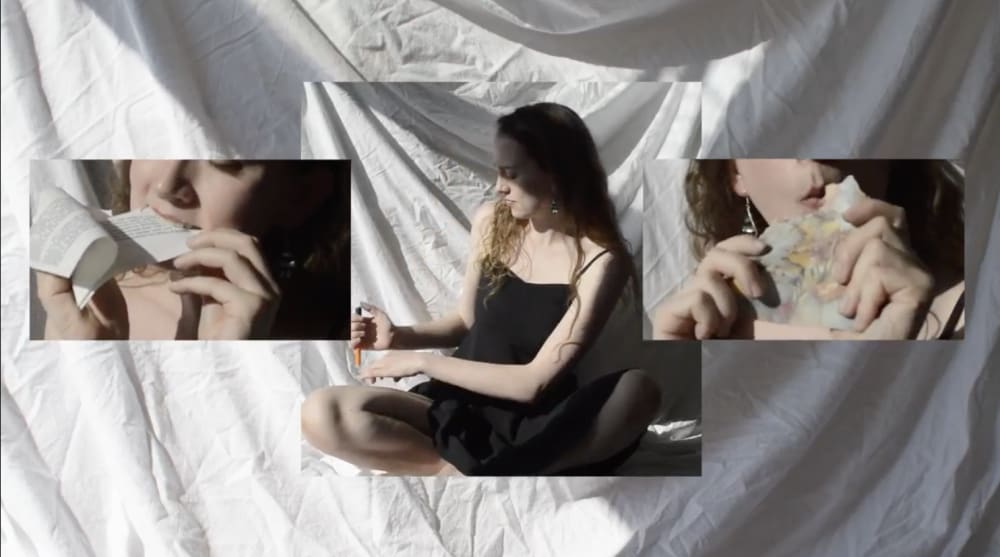
Thank you! Acts of Control was about reclaiming autonomy over my diagnosis. It explored how my chronic illness impacted every part of my life, and I wanted to approach it in a playful, almost rebellious way. One part of the project involved printing my dissertation on sugar paper and eating it as a performance piece. The idea was that if I ate the book without injecting insulin, the sugar content could have seriously harmed me. This act symbolised taking back control and reframing my experience of diabetes.
How did the process of creating this project help you process or communicate your experience?
The process was therapeutic. Weekly critiques meant I not only discussed my creative progress but also reflected on my personal journey. It was comforting to share my story and express myself through my work, even though it was emotionally challenging at times. Looking back, it was a cathartic way to begin navigating my diagnosis.
You use humour in your work and life, such as your themed diabetes diagnosis parties. How does humour help you engage with your diagnosis?
Humour is a great coping mechanism for me. It helps me approach my diagnosis in a lighter, less overwhelming way. For example, my dissertation performance included eating the book to the song Sugar, Sugar by The Archies, which was both silly and meaningful. My annual diabetes diagnosis parties are another example—they turn a potentially sad milestone into a joyful, humorous celebration. Each year has a theme, like “Tie-dye-abetes” or “Dia-beat-es”, a musical theme, which keeps it fun and uplifting.

What advice would you give to current students navigating chronic illnesses or disabilities while pursuing creative studies?
My advice would be to seek support wherever you can—from course leaders, tutors, peers, and the Disability Service at UAL. Personally, I found the Disabled Students’ Allowance (DSA) very helpful. They provided me with equipment like a printer, which made managing my workload much easier. Also, connecting with communities like Sick Magazine, which showcases work by chronically ill and disabled artists, can be inspiring.