LGBTQ+ History Month: Emma Martin on transcending cultural barriers through photography
- Written byJoe O'Brien
- Published date 12 February 2023
Share story
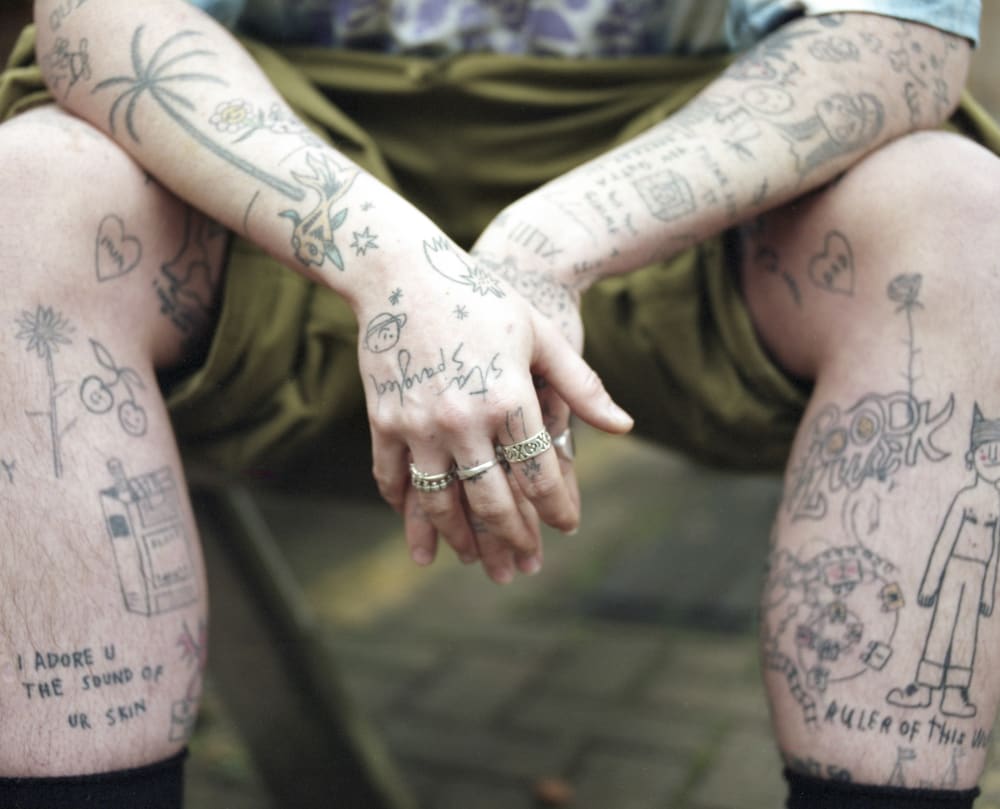
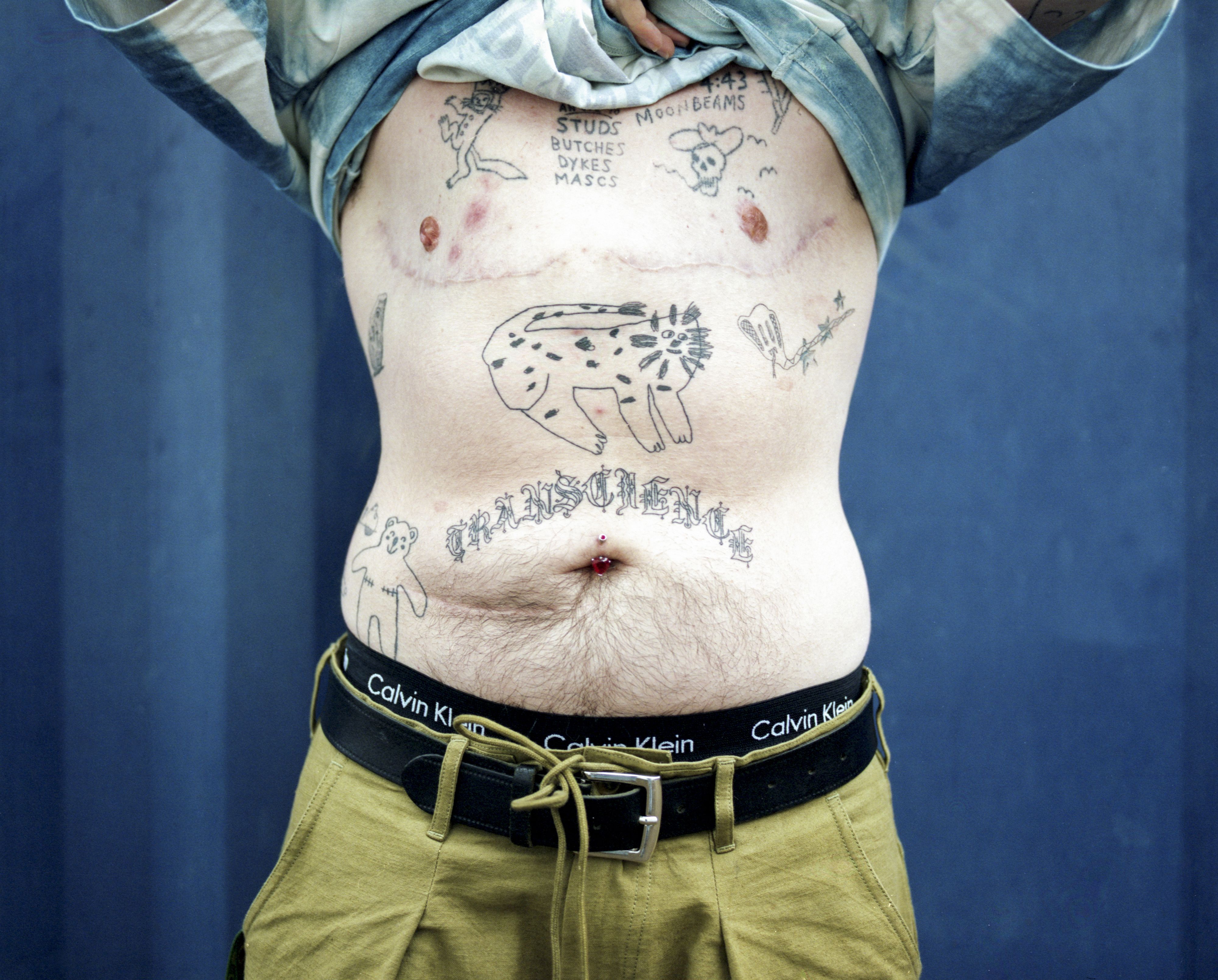
The theme for this year's LGBTQ+ History Month is ‘Behind the Lens’, providing an opportunity to spotlight some of our fantastic alumni carving out a career behind the lens. We spoke with Emma Martin, a graduate from BA Photography at LCC. Emma's final year project was titled 'qttr', which is an acronym commonly used on Instagram by tattoo artists who identify as queer. Her work focused on documenting the queer tattoo artist community in London, highlighting how tattoos can be hugely significant in helping LGBTQ+ people reframe their relationship with their body. You can follow Emma and their work on their website and their Instagram.
You’re a BA Photography graduate of LCC. Do you feel that your experience studying at UAL has influenced your creative journey?
Absolutely, yes. Most importantly through the people it introduced me to. My fellow students and their work inspired me as much as everything else I was taught or shown. Feeling part of a huge creative community at UAL meant I felt in a safe and exciting space to explore both my practice and my identity.
Your graduate showcase submission was titled ‘qttr’ and focuses on London’s queer tattoo artist community. What is it about this topic that intrigued you and why was it important to spotlight it?
I’d found many queer tattoo artists through Instagram, and seeing the way their art was making other queer people feel more comfortable in their own bodies was really inspiring to me. So I made the work qttr as a photographic portrait of London’s queer tattoo artist community. The work explores how, especially for queer people, decorating and embellishing the body with tattoos can improve and re-frame one’s relationship with their body. Honouring the body in such a way is affirming and healing to many queer people, as well as being a means of displaying their way of knowing and viewing the world, and their connections to society, culture, and place. QTTR stands for 'Queer Tattoo Artist' and is a hashtag used online by tattoo artists to signify they are queer and part of the LGBTQ+ community. Many queer people will specifically seek out queer artists due to the considerations they make about the client’s relationship with their body, their gender expression, continuous consent, gender dysphoria, and the importance of the tattoo environment and experience. Lots of queer tattoo artists also make designs specifically for queer bodies.
You’ve described yourself as being interested in photographing groups who aren’t widely documented or who society has pre-conceived ideas about.
Do you think photography can help to educate and break down stereotypes/generalisations?
It can be a bit of a stereotype, but I do believe photography (like most art) has an amazing way of transcending linguistic, social and cultural barriers. A photograph can give the viewer access to a moment or viewpoint that they wouldn’t otherwise get access to – and that’s a great tool for showing people something from another perspective, and can encourage them to reconsider their opinion of it. There’s a real privilege in being given the opportunity to view a community you’re not a part of from within, and I think it can really help people see the similarities they share as opposed to the differences. Essentially, I think a good photo can really bring out the humanity in a viewer and change the way they judge others (often simply because they don’t understand them).


What have you been working on since graduation? Anything you’d like to share with us?
Since graduating, I’ve mainly been working on a long-term found photography project that I started in the first Covid-19 Lockdown of 2020 and have continued since. The project is called 'eBay Archives' and consists of found photographic images from boxes of strangers’ 35mm colour film slides, all bought on eBay. The photos are from all over the world and date from the 1950s - 1990s. The original photographers all remain unknown. How the slides end up on eBay and in my hands is mostly a mystery, although I suspect most are resold from estate sales and flea markets. The images come with no backstory or origin information from the sellers - although some have dates, locations, or the names of subjects scribbled on the physical slide by their original owners. I’ve now scanned over 10,000 images and am currently working on a book.
I think the images can be used to study a range of concepts surrounding photography and the camera as a cultural object, such as ownership of the image, the intersection between public and private, the accessibility of photography through time and the crisis of representation. I’m also currently in the development stages for a documentary project I will be shooting in the Orkney Islands this summer, documenting the landscape, community and folklore out there.
The theme for LGBTQ+ History Month 2023 is ‘Behind the Lens’, allowing us to focus on a real creative aspect of LGBTQ+ history. How critical has creativity been to the LTBTQ+ movement?
I think it’s been completely crucial. From creativity as self-expression, as therapy and as an outlet for individuals, but also as a way of seeing people like yourself represented within queer art, and feeling empowered by that. This empowerment has motivated some of the huge moves that LGBTQ+ activists have made to get us where we are today. Creativity within the LGBTQ+ community has also historically been a way we’ve recognised each other – unapologetically expressing your creativity in how you present yourself can show that you don’t necessarily adhere to societal norms or cultural expectations. Queerness is all about transcending societal rules and living as the change we want to see in the world, and what’s more creative than that?


It’s not uncommon for the talent ‘behind the lens’ to be overlooked for those in front of the camera. Do you feel that there’s more space and visibility for LGBTQ+ creatives today?
I do – as a 22 year old, I feel very fortunate to be entering the creative world as one that’s vastly improved from how it used to be. I haven’t had to experience the prejudice that others before me have, and generally feel that in creative spaces I feel very comfortable in expressing my queerness. I do however feel that there’s still a lot of improvements to be made, especially for trans and non-binary artists in the UK. I think we need to see far more trans representation in the art world and the world in general. I feel like at the moment cis, white queer artists are the dominant queer representation in media and the art world, and that needs to change.


Are there any historical figures – or people making history now – from the LGBTQ+ community that inspire you and your work?
I could list so many names here! In terms of LGBTQ+ photographers that have inspired my work, I’d have to say Nan Goldin, Robert Mapplethorpe, Claude Cahun, Alice Austen, Jo Spence and Catherine Opie. Beyond my work, I’m inspired by trans activist Martha P. Johnson, and poet and activist Audre Lorde. And I’m just quite obsessed with Amanda Lepore. To credit someone I consider to be making history and is really inspiring me now – I love what Sin Wai Kin / Victoria Sin is doing, who I believe is also a UAL alumni!
Is there anything in your creative career that you haven't done yet that you'd like to do in the future?
It’s a big goal of mine to make a photobook of my social documentary work, and (obviously) to have a solo exhibition of my photos. The long term dream really is to be commissioned to document communities around the world, representing people how they want to be represented, and with tenderness and understanding.